ReadyAED

How to manage AEDs, from import to audit

Four steps: import your fleet, inspect each unit, act on alerts and export the records. One register holds the work.

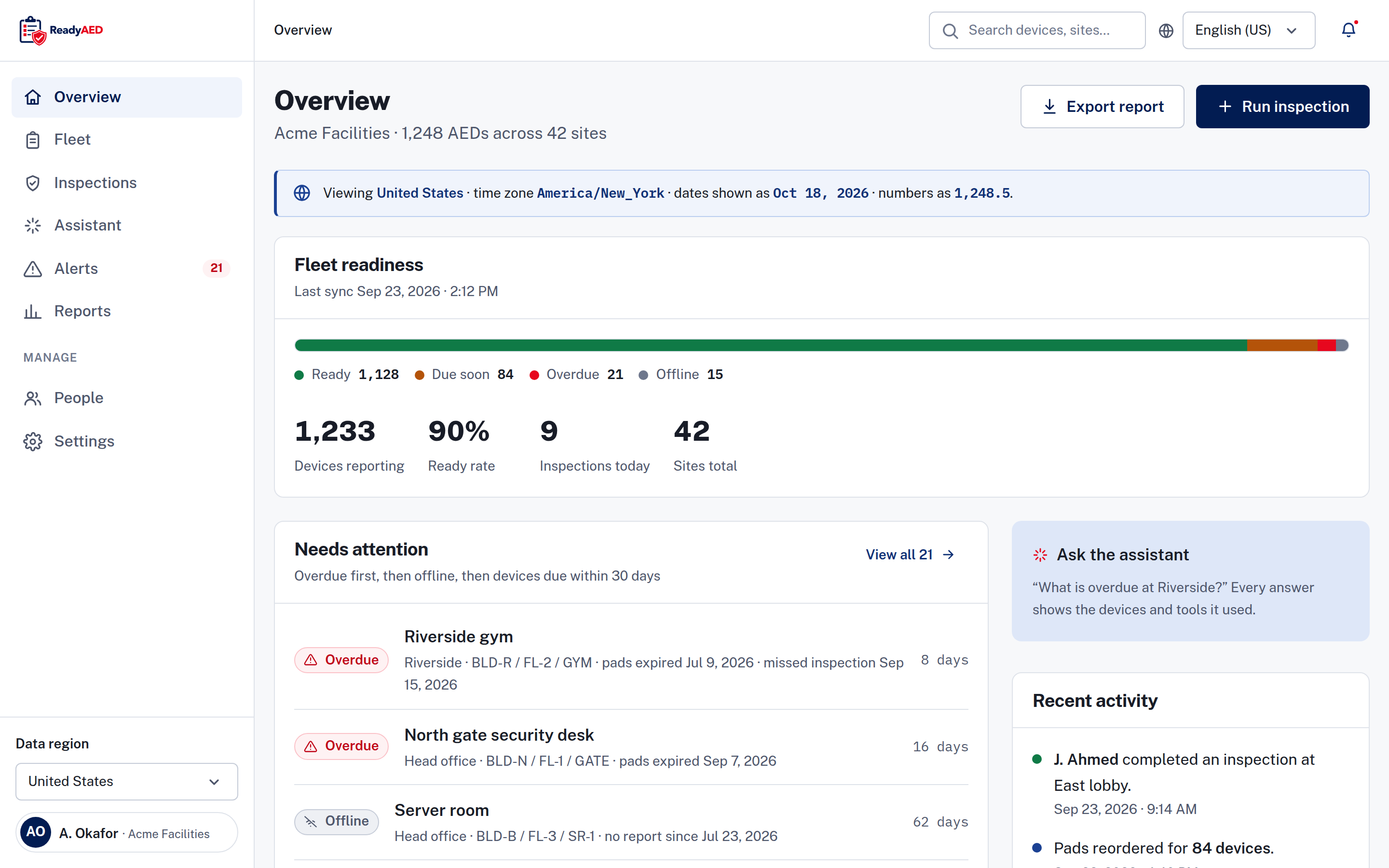
Overview with sample data: a readiness meter, four status counts and a needs-attention list.

You know where most of your AEDs are. You do not always know which pads expire next month or which unit missed its last check. That is the work this page covers.

ReadyAED is an AED readiness and compliance platform. It is software only. One register holds AEDs of any brand, and it tracks inspections, pads, batteries and records.

Facility and safety managers run the program. The four steps below show what your team does, what ReadyAED does automatically, and where the time goes. The steps hold whether you run one building or a mixed fleet across many sites.

Step 1: Import your fleet

The first job is a one-time import. You collect the facts you already have about each unit: brand, model, serial number, site, room or floor, and pads expiry date. You add each device to the register and assign a custodian to it. Start with one site, then repeat for the rest. Most of the effort is the data you already hold.

A location path uses building, floor and room, so two units with the same name stay apart. Serial numbers and asset IDs both work as identifiers.

How long setup takes depends on your fleet size and how complete your current records are. You add devices to the register one at a time. If you already keep an AED list, see the note below.

ReadyAED takes over the record keeping. The register shows serial number, location path, site, status, pads expiry, battery percentage and last inspection date. You can search by device, serial number or location, and filter by status, brand or site. Each device carries a printable QR code, and a scan opens the device record. Manuals, certificates and service records upload to the same record. The register covers every brand. See Mixed-fleet AED management.
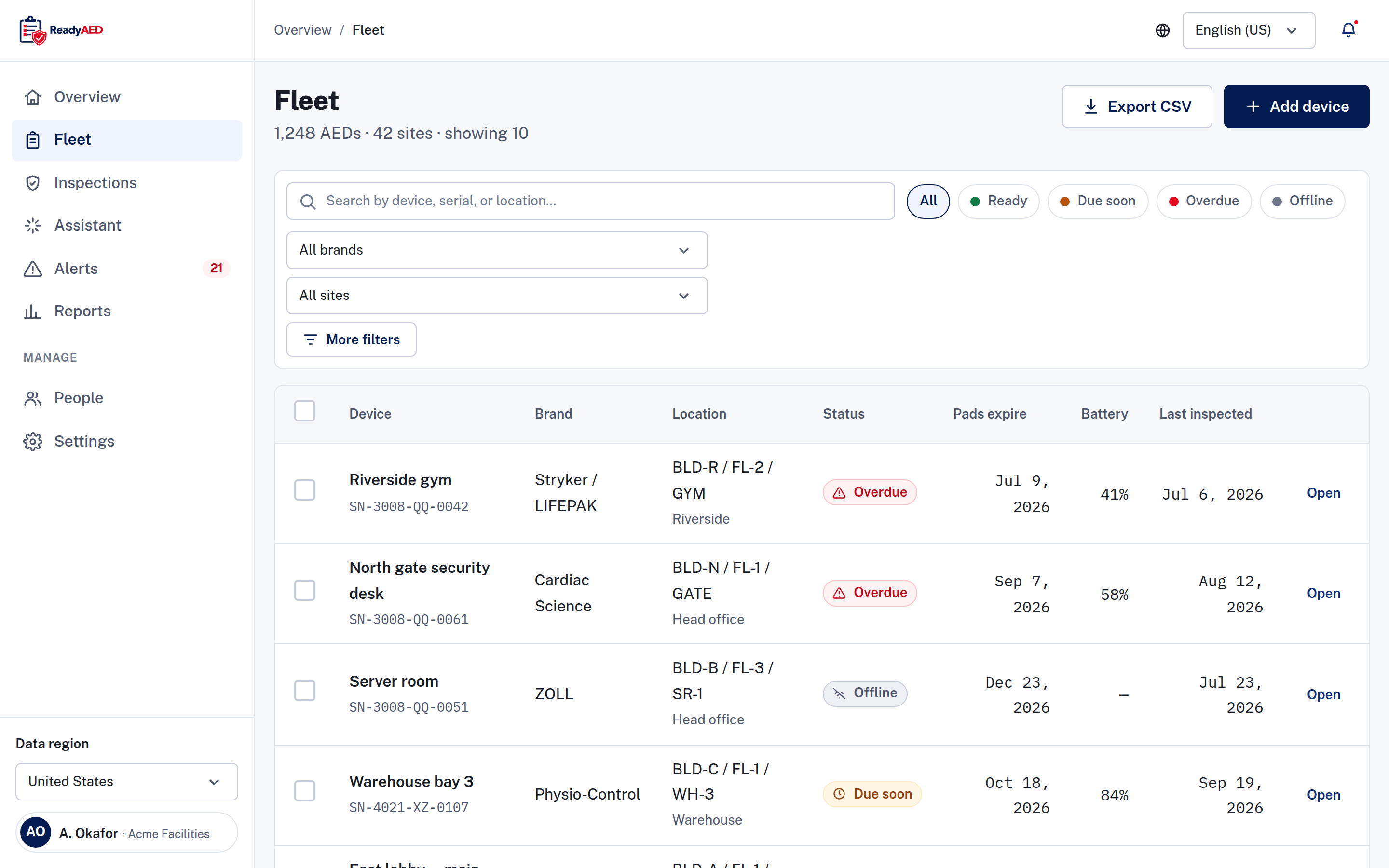
Fleet register with search, status filters and rows showing brand, serial number, site and pads expiry.

Step 2: Schedule and inspect

ReadyAED tracks the inspection schedule for every device and flags a check as Due soon within 30 days. When a check comes due, the register shows who inspected last and who the custodian is, so a shift change does not lose the task. A missed scheduled inspection stays in the device timeline.

Your inspector opens the device on a phone. The inspection screen is phone-first and runs in the browser on Android and iOS phones. The check itself is one short pass through the checklist.

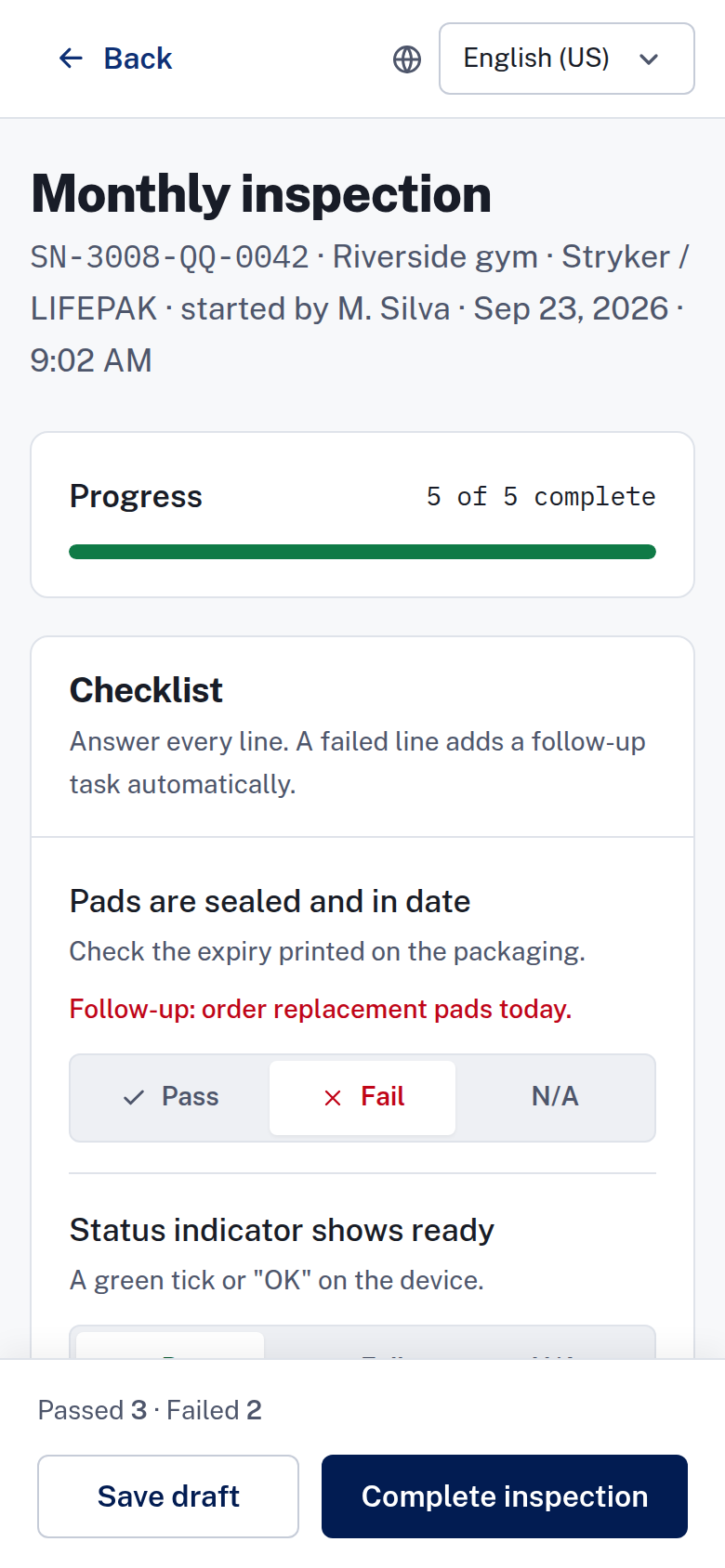
The inspector answers five checklist lines: pads sealed and in date, status indicator ready, battery within range. The last two lines check the cabinet is unlocked and unobstructed, and the rescue kit is sealed and complete. Each line is answered Pass, Fail or N/A. Every line must be answered before the inspection is complete.

Notes are optional. Photos are optional, and they can come from the camera or the library. The progress bar shows the passed and failed counts, and the inspector can save a draft.

A failed line creates a follow-up task automatically, for example order pads, order a battery, raise a service request, clear an obstruction or restock a rescue kit. The finished inspection lands in the device history with the date, the inspector, the result and the battery reading.

Average inspection time: measured average inspection time. For the phone flow in detail, see Mobile AED inspection app.

Phone inspection checklist with five lines and Pass, Fail and N/A controls.
"In under a minute."

Step 3: Get alerted

Alerts watch the dates continuously between checks. Every device shows one of four states: Ready, Due soon, Overdue or Offline. Each state carries an icon and a word, so status never depends on color alone. The four states use the same words in the app, in email and in print.

The four device states
State Meaning Action
Ready Inspected, in date, reachable None
Due soon Due within 30 days Schedule or order
Overdue A pads date passed or an inspection was missed Resolve now
Offline No report was received Check the device

Your team acts on the alert. The device record gives the reason and two actions: order replacement pads or run an inspection. The overview lists the units that need attention, with overdue devices first. Site staff join by invite, and each device names its custodian and last inspector.

ReadyAED sends five email templates: inspection due, overdue, device used, weekly digest and invite. The consumables view lists every pad, battery and rescue kit that expires in the next 90 days. It shows the devices affected and the reorder cost, and you can create a purchase order in the app. Fulfillment is by partners. ReadyAED sells no consumables. See Expiry & consumables tracking.

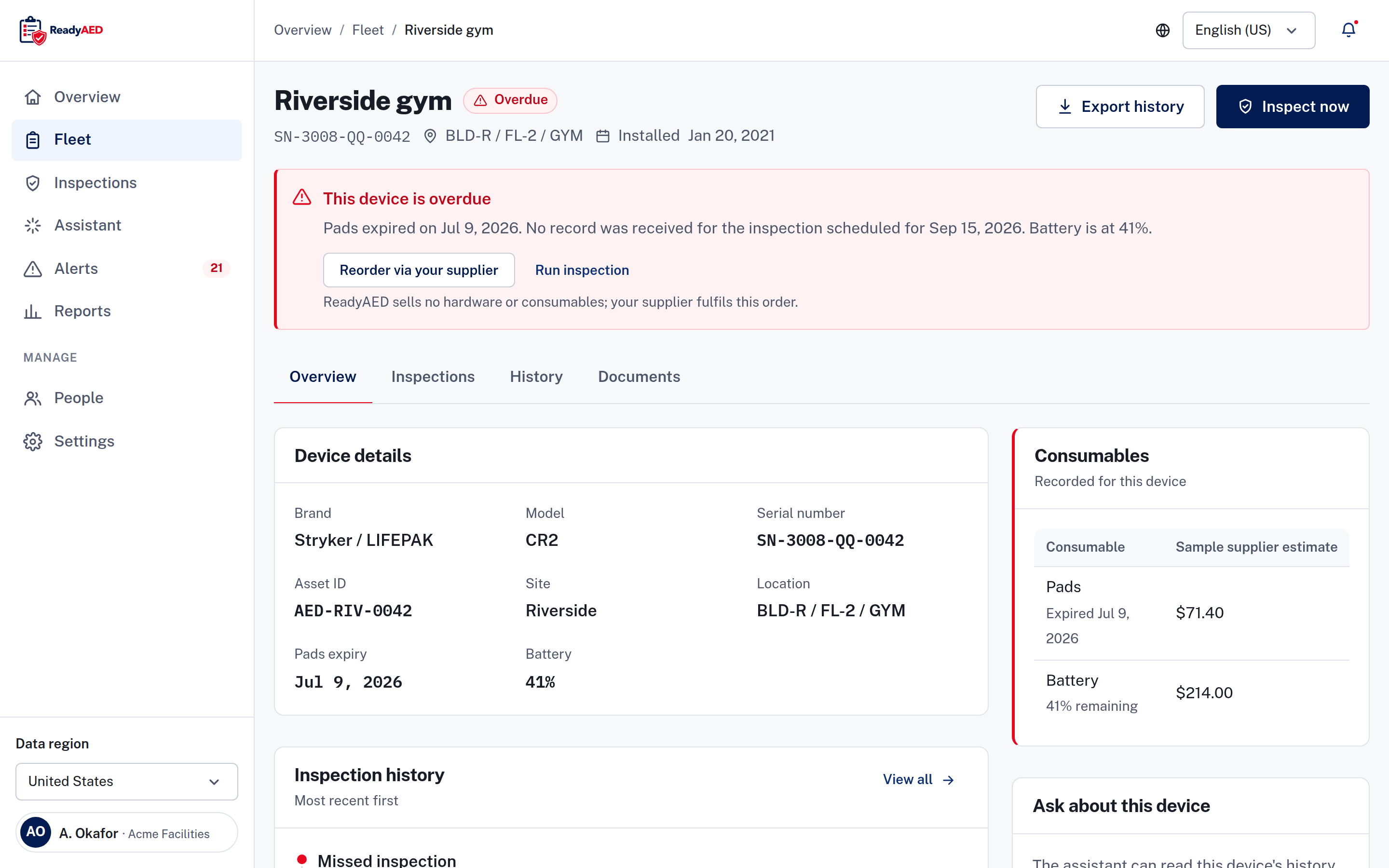
Device record with an overdue alert, an expired pads date and an event timeline.

Step 4: Prove readiness

An auditor, a board member or an insurer asks for the inspection record. You export a report, a CSV file or the device history in one action. Then you share it with the person who asked. The audit trail records user and system events, device history and inspection history. Documents stay attached to the device they belong to, so you do not hunt for a certificate. The activity feed shows recent events with the actor and the time, and it links to the full audit log.

Your team does nothing extra. Every inspection, note, photo, status change and document upload lands in the record as the work happens. When the question comes, the record is already there. Dates, times, numbers and currency appear the way your region writes them. See Compliance automation for the records side.

ReadyAED keeps records and does not give legal advice. It makes no guarantee about the outcome of any inspection. legal-approved disclaimer text this passage needs legal sign-off

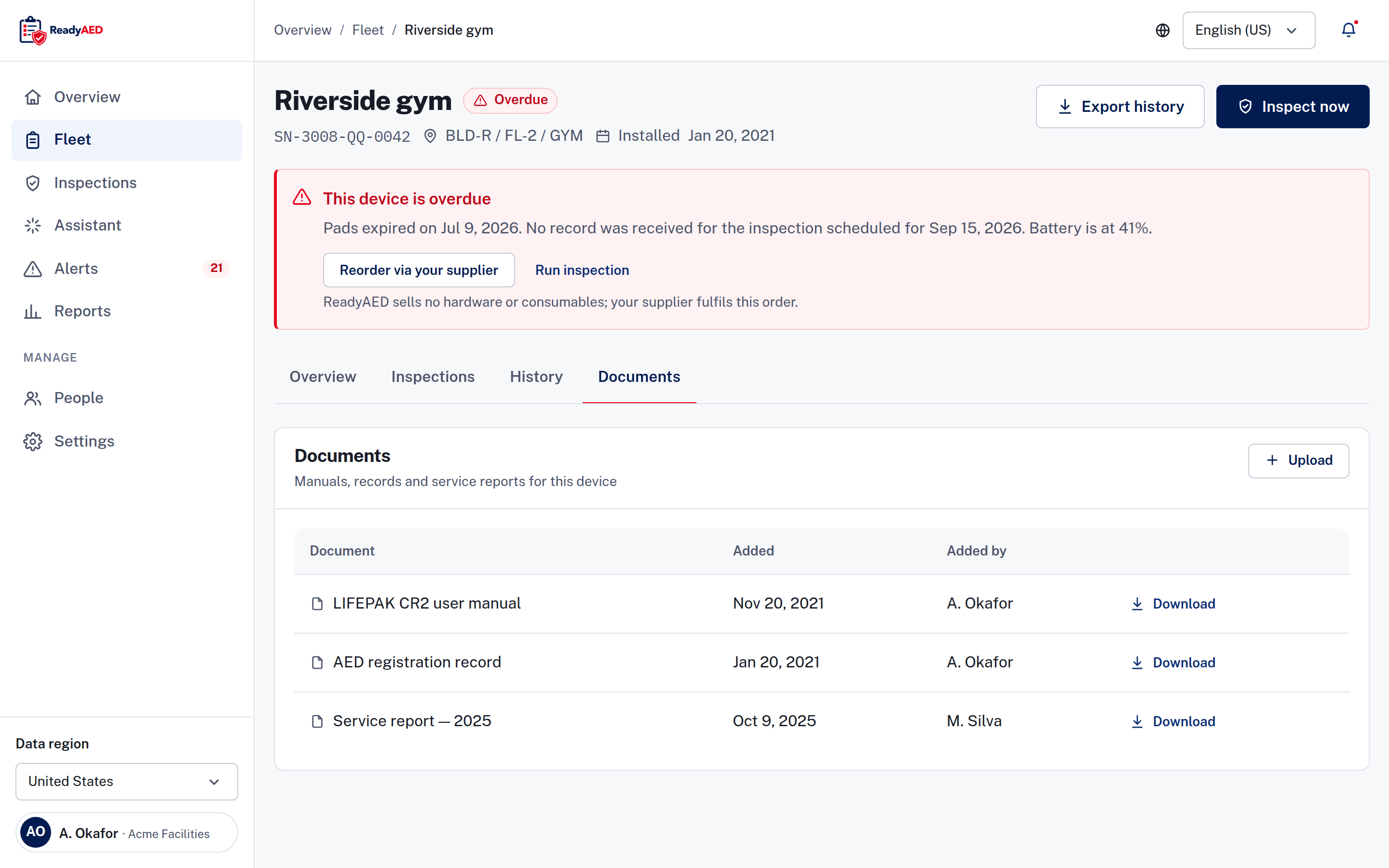
Device documents tab with the user manual, AED registration record and service report attached.

If your list lives in a spreadsheet

You keep the AEDs you own, and ReadyAED sits on top of that fleet. Ask about your existing list in the demo.

confirmation of bulk import or migration tooling

New inspectors start without a training session. product confirmation required before publishing this claim

Offline

"Offline" is a device state, one of the four. It means ReadyAED did not receive a report from that unit, so your team checks the device. It does not describe the app working without a network.

If your sites need inspections without a network, ask in the demo. confirmation that inspections work without a network, and how records sync

What produces a device report and what sends the device-used notice are also unconfirmed. what generates a device report, the Offline state and the device-used notification

See the four steps on your own fleet.

In a 30-minute demo we walk through the four steps with your sites, your brands and your inspection load. Bring your hardest question about import, alerts, records or offline inspections. You leave with a clear view of the setup effort, the alert volume and the records path. Pricing is one flat rate. See Pricing for what the flat rate covers.